
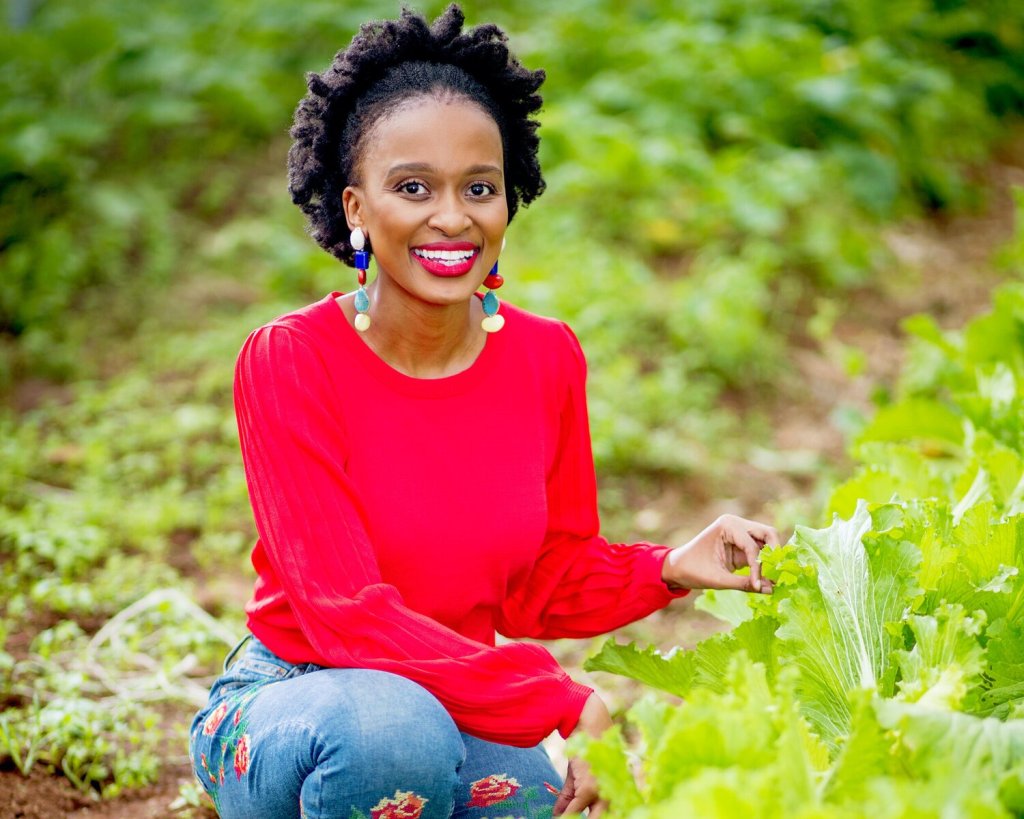
In a world confronted by climate change and the challenge of feeding a growing population, Ndoni Mcunu, Co-Founder of the non-profit organization Black Women in Science, stands at the intersection of environmental science, agriculture, and equity. In this interview, she shares her insights into the hurdles and triumphs of her journey, as well as her commitment to inspiring and supporting young scientists, especially black women.
Ndoni Mcunu hails from KwaZulu-Natal, Durban, a province in South Africa. Her journey in academia began nearly a decade ago. Ndoni, who pursued of a Ph.D. in environmental science, with a focus on agriculture, food security, and climate change, say that her passion for agriculture, women’s development, poverty alleviation, and education are the driving forces behind her work.
Challenges in agriculture and food security
Ndoni sheds light on the challenges plaguing agriculture today and the struggles of feeding a burgeoning global population amid limited land resources. Climate change emerges as the primary hurdle, especially for developing nations lacking the resources, capital, technology, and infrastructure required to adapt. Without proper training and awareness of climate-adaptive strategies, food production is bound to suffer.
She adds: “In addition, there is the challenge of attracting young people to agriculture. The lack of young people in this field reduces the adoption of new and innovative methods.
Another issue is the lack of technological and financial support for farmers in developing countries. Farming can be labour intensive, and without technology, we are very limited when it comes to intensifying food production and increasing yield.”
In addition, climate change has more recently led to extreme droughts, resulting in substantial reductions in food production. “In many cases, farmers lack efficient adaptation systems such as irrigation technologies. These extreme weather events severely disrupt food supply chains,” she explains.
The ongoing transformations in the food system
Over the past decade, the introduction of technology has significantly improved food production efficiency. Urban agriculture and sustainable farming methods have become vital, considering the increasing transformation of rural areas into urban landscapes. Sustainable intensification, eco-agriculture, and diversification have emerged as promising strategies for adapting to climate change and maximizing food production on limited land.
Ndoni’s research specifically concentrates on the effects of climate change on agricultural production for sub-Saharan farmers.
In this region, where a considerable portion of agriculture is small-scale, innovative farming methods are necessary to ensure food security. However, limitations in technology, capital, and labour impede the scalability of farming operations.
Additionally, the impact of climate change is exacerbated for farmers in developing countries, adding urgency to her research. Ndoni aims to discover methods that can help farmers in this region improve food production, thereby enhancing food security and offering solutions to climate change mitigation.
Promoting black women in science
Ndoni’s commitment to promoting women in science led to the establishment of the non-profit organization, Black Women in Science. The organization’s mission is to encourage young black women to pursue careers in Science, Technology, Engineering, and Mathematics (STEM). Ndoni emphasizes the importance of mentorship and role models in helping young women enter specialized fields.
Ndoni explains: “There is a lack of communication between the women who have studied specialised sciences, the ones who are working in the industry and the ones who wish to enter the specialised fields. That means there is a lack of mentors and role models for young women who want to enter these specialised fields. That’s really important, because having more black role models in these fields will help those wishing to enter the field to have a sense of identification and see that it is possible.
The lack of black females limits diverse thinking and doesn’t allow for different views and opinions in addressing complex problems. It is very important to ensure equal representation in specialised fields as this could bring new and innovative solutions to solving problems and influencing policy.”
Ndoni offers three invaluable pieces of advice to aspiring scientists:
- Gain a holistic understanding of your industry, recognizing its relevance in both the corporate and academic sectors.
- Prioritize science communication, as sharing your work with the world can foster curiosity and understanding.
- Embrace self-discovery to identify your passions and interests, ultimately driving your career path.
Ndoni Mcunu’s journey is a testament to the transformative power of dedication, the importance of nurturing the next generation of scientists, and the role of science in mitigating the impacts of climate change on agriculture. Her work continues to inspire and drive progress, ultimately contributing to a more sustainable and equitable world.
An article by Anne-Sophie Garrigou.



 WICA Magazine
Leave a comment