
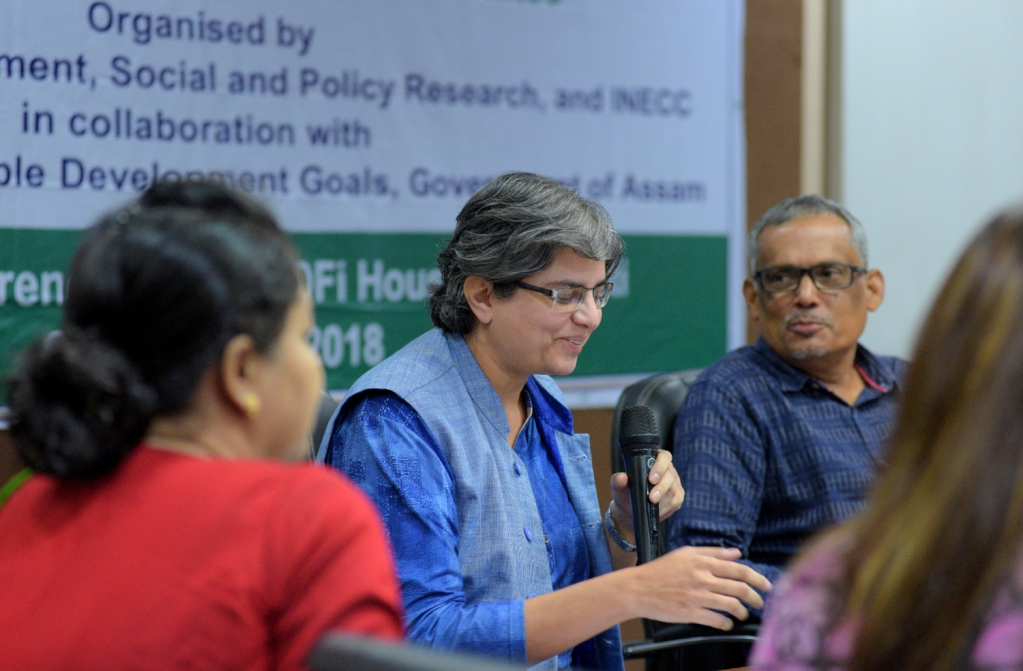
Dr. Priyadarshini Karve, an Indian physicist and CEO of Samuchit Enviro Tech, is on a mission to foster sustainability and combat climate change through innovative solutions. In this interview, Dr. Karve discusses her work, the pressing challenges of sustainable development in Western India, and the crucial role of clean cooking technologies in transforming lives.
Creating opportunities for sustainability awareness
Dr. Karve emphasizes the importance of involving people in sustainability discussions. She believes that policies and business priorities are influenced by public demands, which is why she focuses on engaging the general public in conversations about sustainability, climate change, and their local implications. Samuchit Enviro Tech’s primary mission is to promote clean cooking technologies powered by biomass fuels, addressing indoor air pollution and its adverse health effects, particularly for vulnerable populations.
To achieve her goals, Dr. Karve and her team employ various means such as meetings, workshops, social media, newspaper articles, and consultancy services on energy savings, pollution mitigation, and renewable energy promotion. One of their ambitious projects aims to make Pune, a city in Western India, carbon-neutral by 2030 while developing a roadmap for overall sustainability.
Sustainability challenges in western India
Dr. Karve points out that Western India, including highly industrialized areas like Mumbai, consumes a significant portion of India’s fossil energy and contributes significantly to the country’s GDP and carbon emissions. The intense industrialization and urbanization in this region have led to land use changes, including the Western Ghats Mountain Range, a globally recognized biodiversity hotspot. However, with the migration of people from across India seeking a better life in the region, there’s a critical need for Western India to lead the way in low-carbon urbanization and a circular economy.
Tackling indoor air pollution
Indoor air pollution is a major issue in India, especially for the urban poor living in congested, poorly ventilated homes and using traditional biomass cookstoves. Dr. Karve emphasizes the need to address this problem, as indoor air pollution is responsible for a significant number of deaths in the country. Samuchit Enviro Tech is working to introduce cleaner alternatives to these traditional cooking methods, such as Liquid Petroleum Gas (LPG).
LPG is a clean-burning gas that provides a convenient cooking energy option for urban households. Dr. Karve acknowledges its advantages in terms of cleanliness and ease of use but highlights the supply chain and cost challenges, especially in rural areas. LPG is unaffordable and less accessible for rural households, which often must travel to refill their cylinders, incurring additional costs and loss of wages. Additionally, LPG has limitations, including unsuitability for certain cooking tasks in traditional Indian cuisine and the inability to provide space heating.
For rural areas, where affordability and access are key concerns, Dr. Karve suggests focusing on decentralized organic waste-to-fuel technologies. These technologies utilize locally available waste biomass, offering renewable, low-cost, and clean-burning fuel options. The advantage lies in reducing climate change and environmental impacts while ensuring affordability.
Overcoming challenges for clean cooking
The main challenge in achieving clean cooking for all, according to Dr. Karve, is the lack of effective policies and their implementation. The voiceless and vulnerable populations are often neglected, with well-intentioned policies failing to address their real needs and challenges. The flawed definition of clean cooking, solely focusing on device ownership, further complicates the issue.
Dr. Karve proposes a shift in defining success in clean cooking, emphasizing that success should mean reduced pollution in households, not just ownership of devices. This shift in thinking will lead to changes in policies, funding priorities, research, and project design, ensuring that no one is left behind.
She suggests that low-cost technological solutions can be the key to achieving clean cooking for the poorest populations. Combining affordable stoves with cost-effective ventilation solutions can achieve clean indoor air without compromising quality. Additionally, innovative financing strategies can make even expensive technologies accessible to poor households.
Dr. Priyadarshini Karve’s work with Samuchit Enviro Tech is not only transforming lives in India but also inspiring a shift in thinking about sustainability, clean cooking, and inclusive development. By recognizing the importance of involving the public and changing our definition of success, we can overcome challenges and work together towards a cleaner, more sustainable future for all.
An article by Anne-Sophie Garrigou.



 WICA Magazine
Leave a comment