
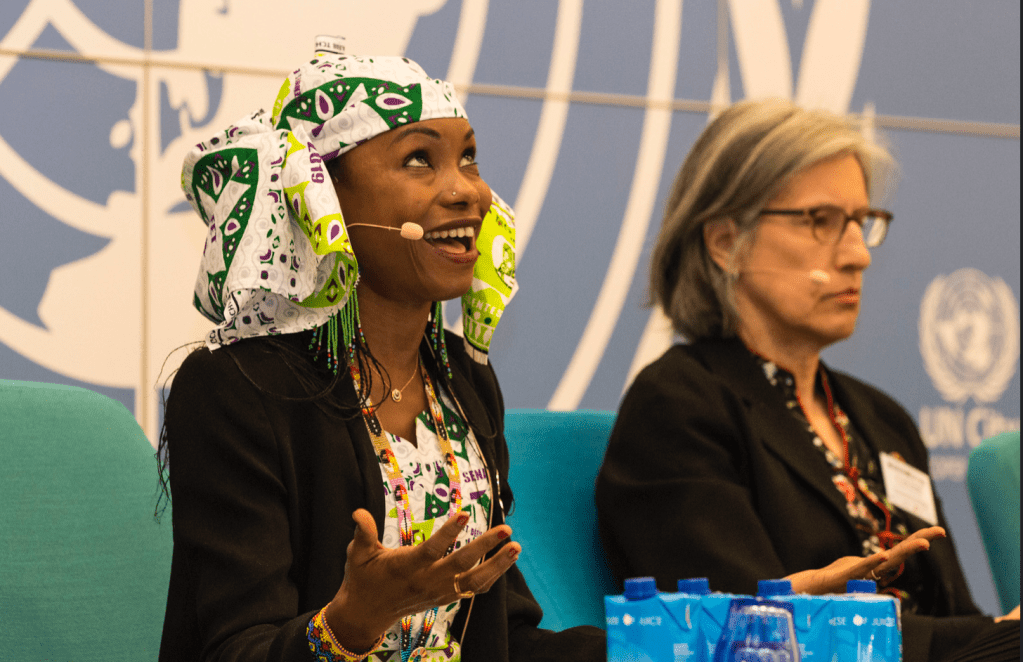
“For indigenous peoples, there is no difference between the environment and life. We are connected to nature, we find our resources in nature, we protect it.” — Hindou Oumarou Ibrahim
In a world grappling with the pressing issue of climate change, Hindou Oumarou Ibrahim stands as a remarkable force for change. Born in Chad in 1984, she has dedicated her life to preserving the rights and culture of indigenous communities, especially the Mbororo people, to whom she belongs. Her journey from the bustling capital city of N’Djamena to the traditional nomadic farming practices of her community has forged her into a relentless environmental activist and geographer.
Ibrahim serves as the Coordinator of the Association of Peul Women and Autochthonous Peoples of Chad (AFPAT), a community-based organization she established in 1999. The primary aim of AFPAT is to advocate for the rights of women and girls within the Mbororo community and to foster leadership and environmental stewardship.
Climate change: A call to action
Hindou Oumarou Ibrahim is more than an environmentalist; she is an expert in the adaptation of indigenous peoples to the changing climate. Her tireless efforts have taken her to numerous international summits, where she tirelessly advocates for the rights of indigenous people and sheds light on the dire consequences of climate change. In her own words, she emphasizes the profound connection between indigenous cultures and nature. For them, there is no distinction between the environment and life itself. They protect and are protected by nature.
As a member of the Mbororo community, Ibrahim has witnessed firsthand the devastating effects of climate change on her people. What were once predictable seasons have given way to intense droughts, heatwaves, and sudden floods. The very essence of their culture and way of life is at stake. The Mbororo people, once able to milk their cows twice a day during the dry season, now struggle to do so every two days. Climate change threatens not only their existence but also their invaluable knowledge of the environment.
The role of Indigenous knowledge
Indigenous peoples, like Hindou Oumarou Ibrahim’s Mbororo community, are among the first casualties of global warming. Living in close communion with nature, they are often marginalized and unjustly impacted. Traditional routes for herding and watering are blocked, sometimes leading to land theft under the guise of industrial farming for food security. This injustice highlights the importance of including indigenous voices in climate policy formulation.
Ibrahim’s dedication to the protection of traditional farming methods, indigenous cultures, and their vital role in combating climate change is unwavering. It is imperative to recognize the wealth of knowledge these communities possess in sustaining biodiversity and protecting against climate change’s effects.
In the midst of international climate conferences, technological advancements take center stage while indigenous knowledge receives less attention. However, the Paris Agreement acknowledged the importance of traditional knowledge, thanks to the advocacy of Ibrahim and her peers. Indigenous communities play a crucial role in safeguarding unique ecosystems that mitigate climate change’s impacts. Their knowledge, passed down through generations, must be preserved and respected to ensure a sustainable future.
The contrast between Hindou Oumarou Ibrahim’s testimony and the speeches of some world leaders on climate change is stark. She does not dismiss the importance of modern technologies but emphasizes that traditional knowledge is equally vital. While modern weather forecasts might not reach remote areas, indigenous knowledge often steps in. Elders can predict rain by reading the clouds and the wind’s whispers. This profound connection with nature has sustained indigenous communities for centuries.
Hindou believes that the world needs both technological and indigenous wisdom to combat climate change effectively. Combining the two can help protect the environment and ensure it, in turn, safeguards humanity. She has pioneered projects that bridge traditional knowledge and science to create comprehensive solutions for climate preservation.
Leaving No One Behind
“Leaving no one behind” is not just a phrase for Hindou Oumarou Ibrahim; it’s a call to action. She emphasizes the need to listen to those who lack access to education and modern amenities. In her community, education is a luxury, and infrastructure like hospitals and schools is scarce. However, they are rich in culture and knowledge, assets she champions on the global stage. She speaks not just for her community but for those often unheard in the international climate discourse.
The divide between the experiences of affected communities and the negotiations in conference rooms is vast. Ibrahim fights for those without suits and ties, whose daily lives are defined by climate change’s consequences. Her aim is to bridge this gap and bring much-needed support to underserved populations.
She explains that one of the most challenging aspects of her work is the stark contrast between the hope of her community and the often sluggish response of international decision-makers. Her people look to global decisions for change, but these decisions can be disappointingly slow. The rejection of crucial reports on climate change by some nations exemplifies the struggles she faces. Bridging the worlds of her community and those of the negotiators can be heart-wrenching.
A glimmer of hope
Despite the challenges and hardships, Hindou draws hope from the resilience and resourcefulness of indigenous communities. Their wisdom and the recognition of their traditional knowledge in international forums inspire optimism. The youth, too, play a pivotal role in bringing about change. Hindou Oumarou Ibrahim is unwavering in her dedication to ensuring that no one is left behind in the fight against climate change.
As she aptly concludes, “We must never forget the role of women, which is vital in the fight against climate change at every level, especially in rural places. Women are innovative and they protect the community and the environment at the same time. But they are also the first to suffer.”
An article by Anne-Sophie Garrigou.


 WICA Magazine
Leave a comment