
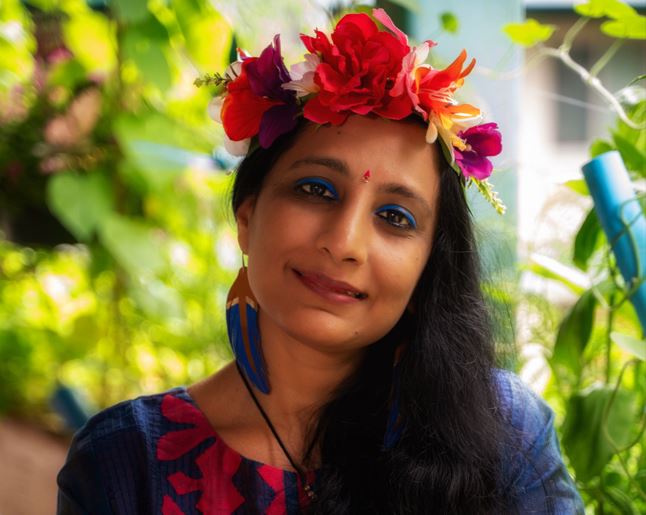
In a world grappling with the climate crisis, one woman stands at the intersection of creativity, climate advocacy, and justice. Neha Misra, an award-winning climate justice advocate, eco-folk artist, and poet, is not just an advocate for change but a powerful force for transformation. In this article, we delve into a conversation with Neha, exploring her unique perspective on climate narratives and the healing power of art in creating a sustainable and just future. Here she talks about personal transformation, collective action, and the role of art in reshaping the climate conversation.
“Burnout is not a personal failure but a consequence of
systemic extraction and unhealthy practices that need
to change within our relationships and organizations”.
Neha’s early years in New Delhi, India, instilled in her a deep sense of reverence and responsibility for the relationship between humanity and the planet. Her family, including her mother, a doctor, and her grandmother, an educator served as her first environmental role models, “even though they never call themselves, quote, unquote, environmentalists,” she adds.
Neha’s climate leadership journey
Neha’s career began in the Sunderban Islands, one of the world’s largest mangrove forest systems and a climate hotspot. She recalls: “There, I met women solar installers and entrepreneurs whose impact on me showed the transformative potential of combining women’s power with solar power. These women in the Sunderbans became my inspiration for two decades of grassroots community solar work across Asia, Africa, and North America.”
As a first-generation immigrant, Neha now calls North America her adopted home. She also serves as the global ambassador for Remote Energy, an organization co-founded by women solar installers, working to make solar PV installation more accessible and inclusive, and emphasizes how her global experiences and transcontinental perspectives are integral to her climate leadership.
Hey journey into the climate movement has been a testament to the need for a more holistic approach to the climate crisis. She emphasizes the growing awareness within the climate movement that issues of intersectionality and justice are paramount. In a world facing unprecedented environmental challenges, the connection between climate change, race, class, and gender is becoming more evident.
She says: “My intersectional creative studio combines the transformative power of art and climate solutions to build bridges between our private collective and planetary healing and justice. I am a daughter of the global majority. And to me, intersections mean, how we acknowledge how race class gender and so many other aspects of our identities are impacting our work in the climate movement and also how we experience climate impacts.”
“I believe it’s crucial to highlight the Intergovernmental Panel on Climate Change’s recent acknowledgement of the role of colonialism in climate impacts faced by people of colour worldwide. As the child of parents born around India’s independence from colonial oppression and as a brown woman in present-day America, I deeply understand how these identities and experiences shape my climate leadership. To me, intersectionality means recognizing how race, class, gender, and various aspects of our identities impact our work in the climate movement and our experience of climate impacts.”
Addressing burnout in the climate movement
During our conversation, Neha delves into the issue of climate burnout, a toxic element within the climate movement that often remains unaddressed. She highlights that burnout affects both individuals and the movement itself, leading to a “burning world filled with burned-out human beings”. She cites a report by Climate Critical, showcasing concerning trends of climate workers dealing with burnout, disproportionately impacting people of colour.
She says: “For me, it’s been a journey to confront and overcome the effects of climate burnout. The love and support of my community, along with my creative practice, have helped me emerge from this burnout. I’ve learned that as climate leaders and practitioners, we must recognize that a sustainable world depends on sustainable human beings. The relentless pursuit of efficiency and productivity, which I see as tools of oppression, should not come at the expense of systemic care, nourishment, and relationship-building within our organizations.
I’ve come to understand that burnout is not a personal failure but a consequence of systemic extraction and unhealthy practices that need to change within our relationships and organizations. To navigate burnout successfully, I’ve embraced practices like sabbaticals, and thoughtful leadership transitions, and rejected the norm of overworked, always-on climate leaders. My studio practice, focused on bridging sustainability in our private and collective lives while embodying wholeness, has played a significant role in my healing journey.”
The role of art in climate narratives
Neha has been on a journey to combine her art and climate advocacy. She says art plays a vital role in creating inspiring climate narratives, and believes that art isn’t just an aesthetic addition but a powerful tool for dreaming of a more just and sustainable future.
She says: “Creativity has been essential for my personal healing and recovery from burnout. It has allowed me not just to survive but to thrive. We all deserve a flourishing life, and by nurturing our well-being, we can contribute to creating a flourishing world. Art plays a vital role in this transformation, connecting us with the Earth, helping us mourn the losses we’ve experienced, and countering greenwashing and apathy. Art is also a powerful tool against the suppression of climate solutions by fossil fuel interests. It heals our interconnected web of life, reminding us that resistance alone is not enough. We have the right to dream of a just and inspiring vision of a climate-resilient future where shared flourishing is the norm, not just for a small percentage of people, particularly white men. Art is not a mere decorative element; it is a form of prayer, a revolution, a source of healing, and a powerful force that our world needs now.”
Neha underlines the importance of interdisciplinary collaboration, bringing artists, scientists, policymakers, and activists together. These collaborations can offer fresh and innovative perspectives that move beyond traditional boundaries. She, for instance, worked with a somatic dance company, highlighting the power of collaboration in the intersection of different creative forms.
Neha’s recommendations for finding inspiration:
Throughout the conversation, Neha points to several inspiring movements and organizations that are shaping the climate narrative. She mentions Design Science Studio, a creative incubator focused on regenerative future building. The Solarpunk movement, rooted in speculative fiction, envisions transformative climate futures and inspires change. And Remote Energy a real life solar punk organization making the solar PV field more equitable.
Recently, Neha was part of the Women’s Environmental Leadership Summit organized by the Anacostia Community Museum’s Center for Environmental Justice. This event brought together intergenerational climate and environmental leaders who are making a difference at both local and global levels. Neha sees these movements as essential to reimagining the narratives of climate justice.
Neha Misra’s journey and perspective are a testament to the transformative power of art in the climate movement. Her eloquent words and dedication to creating narratives of hope and inspiration offer a refreshing approach to addressing the climate crisis. By combining personal transformation, collective action, and creative collaboration, Neha inspires us to embark on a journey towards a more just, resilient, and sustainable future. Her words are a reminder that we each have a role to play in crafting a new climate narrative that embraces intersectionality, creativity, and healing.
An article by Anne-Sophie Garrigou.


 WICA Magazine
Leave a comment