

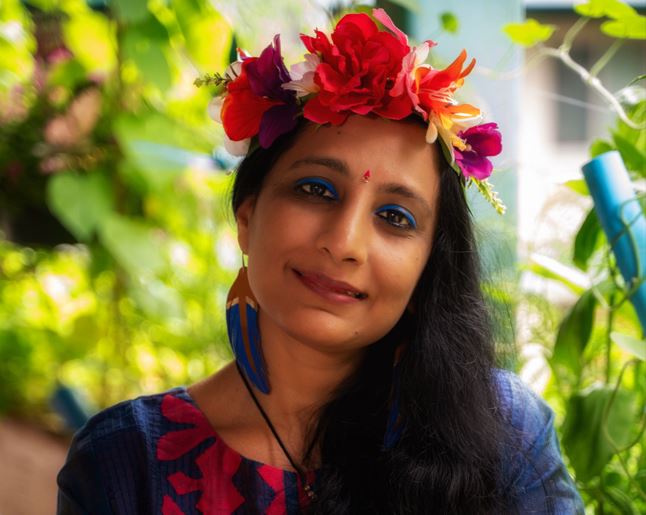
The world is currently grappling with the intertwined challenges of climate change, inequality, and political crises. In this interview, degrowth and climate activist Tonny Nowshin, discusses the complex web of crises affecting her homeland, Bangladesh, the shortcomings of mainstream economics, and the need for a collective response to the challenges ahead.
From student activism to climate advocacy: Tonny’s journey for justice
Growing up in Bangladesh, Tonny was part of the student movement that fought against the privatization of education and health sectors. “I had this idea of equality, or trying to create equal opportunities for everyone, regardless of their backgrounds. So I guess those senses of justice, caring for people, and human values come from that work. The joy of trying to do something together and building relationships with people who see the world the same way as you do.”
Today, she is active in the climate action movement in Berlin and works with the Sunrise Project, an international organization whose mission is to scale social movements to drive the transition from fossil fuels to renewable energy as fast as possible. “My work focuses on influencing major institutional investors, such as the Norwegian Oil Fund in Europe, and raising their awareness about how the money they continue to invest in oil, coal, and gas is not in line with their commitment to being environmentally friendly.”
Rethinking economics: Addressing the poly-crisis and the role of mainstream theories
A wide range of experts, including policymakers, scholars and journalists argue that the world is currently experiencing a poly-crisis. This is due to the convergence of significant challenges, including climate change, economic inequality, political conflicts, the COVID-19 pandemic, and social justice concerns. These crises intersect and amplify one another, creating a more intricate and urgent global landscape that demands comprehensive and coordinated responses to address the multifaceted problems facing societies today.
Tonny points out the responsibilities in mainstream economic theories in exacerbating global problems. She explains how, in these theories, profit often takes precedence over environmental and social considerations. “When I started studying economics, I wanted to find solutions to many of our problems and understand why we tolerate so much injustice in the world. But there are mainstream economic theories that imply that if there is unemployment, poverty, or homelessness, it’s because individuals have freely chosen these circumstances, as they would rather not work and prefer to be on the streets. These are seen as individual choices, and it’s considered fine, so they consider that there’s no need for significant concern.”
She explains that profit-driven decision-making and an exclusive focus on economic growth have caused the current state of ecological degradation, as these approaches disregard the interconnectedness of our economic activity with the planetary system and the urgent need to address climate change.
Bangladesh’s resilience and resource management in the face of climate challenges
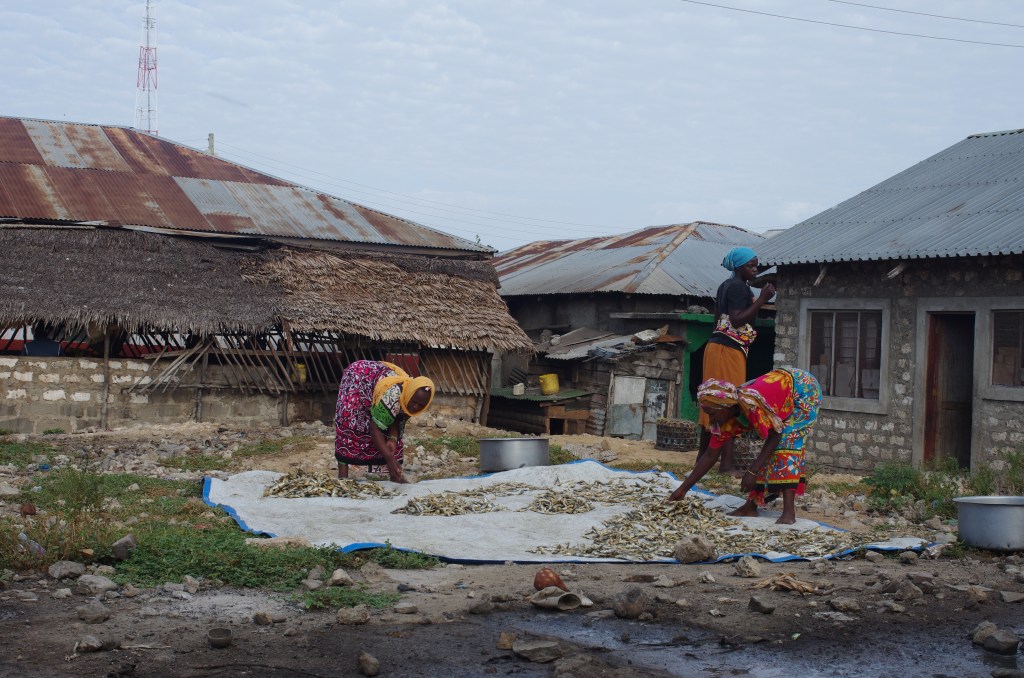
Bangladesh is one of the world’s most densely populated countries. In its recent history, the country faced a multitude of complex crises, including a political crisis in 2006 to 2008, a refugee crisis with Rohingya people fleeing Myanmar, and devastating climate-induced flooding. Tonny reminds us that “a significant portion of the crises in the Global South has been generated at the cost of resource extraction for the Global North. This perpetuates a certain colonial dynamic that persists today and that encompasses many layers of international relations. Some studies even illustrate how foreign aid relationships can be a means of influencing and controlling another country’s policies.”
While the climate crisis presents yet another great challenge for Bangladesh, as it pushes the limits of adaptation, Tonny explains how the country has already developed effective disaster management strategies. “In terms of disaster risk reduction and rehabilitation, Bangladesh has achieved significant progress. Soon after a major cyclone, we can efficiently reach affected people with relief efforts, thanks to the skilled expertise and know-how on quickly providing essential assistance following a large-scale disaster. This includes determining the necessary structures and support systems, such as shelters, to aid in the rehabilitation process.”
The urgent need for collective action
In her interview, Tonny contends that we should not rely on crises to spur action. “I refuse to accept that it takes a highly cruel or shocking event for people to feel the need to take collective action or recognize our failure to act.”
She calls for proactive engagement and collective efforts to address climate change and systemic injustices instead. Positive changes, she says, are possible through community-owned renewable energy projects, growing awareness, and evolving narratives about climate and social justice.
Tonny emphasizes that addressing the climate crisis requires global cooperation and a fundamental shift in the lifestyles and practices of countries with high carbon footprints.
She stresses the need for collective action to hold governments and institutions accountable for their actions. “I believe that unless we establish a robust network within civil society to hold those in power accountable, simply relying on the crisis itself won’t provide us with a way out.”
Despite the challenges, Tonny sees hope in the growing awareness and activism surrounding climate change and social justice issues. She highlights efforts by civil society, community projects, and shifts in global financial practices as evidence of positive change. The power for transformation lies within the collective efforts of individuals, creating a network of accountability and driving change. “We already have many solutions available to us. What we truly need is the intention and policy support. In most cases, when you investigate why these solutions aren’t being scaled up, it’s because there’s no profit to be made from them. It makes you realize how absurd it is—what species drives itself to extinction simply because there’s no financial gain in preserving itself.”
Tonny Nowshin’s perspective highlights the urgency of re-evaluating economic systems and working collaboratively to build a sustainable and just future. The interview serves as a reminder that change is possible when people come together to demand accountability and take meaningful action.
Tonny Nowshin was interviewed by Anne-Sophie Garrigou and Stephanie Klotz for How Could We? podcast, produced by Barbara Mendes-Jorge. You can listen to the whole interview on Spotify, Apple Podcast and Amazon.

 WICA Magazine
Leave a comment