

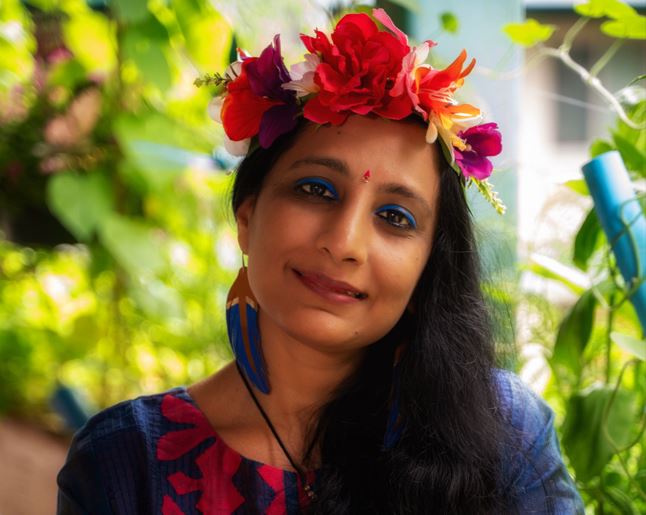
A month from now, climate leaders from around the world will gather in Baku, Azerbaijan, for the 29th UN annual Climate Conference, or COP. The first COP I attended as a journalist was COP23, in 2017. Hosted by Fiji, it was held in Bonn, and I remember thinking that the so-called “Blue Zone” was one of the most diverse spaces I’d ever been to. But for Veena Balakrishnan, co-founder of the Youth Negotiators Academy (YNA), it’s not just about diversity in attendance—it’s about getting those diverse, innovative leadership voices a seat at the negotiation table.
A vision born at COP26
In 2021, Veena participated in COP26 in Glasgow. She remembers feeling disheartened by the lack of diversity in the negotiation rooms. “I was looking around, and the room was very homogeneous. One age group, one hair colour,” she recalls. There were indeed many young attendees at the conference, but only a few of them, if any, were granted access to the critical discussions taking place behind closed doors.
This lack of representation—especially of young people and women—inspired Veena and her co-founders to take action. The Youth Negotiators Academy was established a few months later, in 2022. Its aim? To empower young leaders with the skills necessary to actively participate in multilateral negotiations, such as the UN climate conferences.
“The climate crisis is a leadership crisis,” Veena says. The Academy was born out of a desire to address this leadership gap by equipping young negotiators with the tools and knowledge needed to drive impactful change. But it goes much beyond training. Representation, Veena explains, also means breaking down both procedural and informal barriers. “We need to get people access, but once they’re there, how are they being accepted?”
Building global solidarity
In its first year, the Academy worked with 26 countries across all UN regions. By the second year, that number grew to 54, and in 2024, the Academy is working with youth from 63 countries. “Our mission has always been to be a global program,” Veena shared. “Without global solidarity, you cannot get consensus, and therefore, no progressive decisions.”
In 2023, YNA also launched a new initiative focused on the UN Convention to Combat Desertification (UNCCD). This land-focused youth negotiator program currently operates in 35 countries, training over 100 negotiators. Veena explained that expanding beyond climate was crucial because of the interconnected nature of global challenges. “The three Rio conventions [climate change, desertification, biodiversity] are all connected. However, they operate in silos. We wanted to break that because that’s the only way to push for actual change.”
Looking ahead, YNA plans to launch a biodiversity negotiator program, further broadening its scope to address the full range of environmental crises.
Youth as stakeholders, not spectators
Discussing the recent UN Summit for the Future, which included the first-ever pact focused on future generations, Veena remains cautiously optimistic. While the pact could be a step in the right direction, she says there are still too many unanswered questions. “It feels utopian and very broad… how are we going to negotiate the terms, and how will it be implemented?”
One key issue, she highlights, is that young people are often treated as a separate interest group rather than as full stakeholders. “If you start looking at them as rights-bearing citizens, then you automatically create that space for them.” Youth, Veena argues, need to be recognised for their potential and given genuine opportunities to influence decision-making processes.
Veena’s vision—and the work of the Youth Negotiators Academy—is about more than just preparing young leaders for negotiations. It’s about creating a future where everyone, regardless of age, gender, or background, can have a seat at the table and a voice in shaping the world we live in.
Visit the Youth Negotiators Academy website.

 WICA Magazine
Leave a comment